
Choosing among deck materials is no small decision. The wrong surface can lead to faster wear and more maintenance than you expected. Before work begins, you need an honest comparison of what each option can handle.
In this guide, Mueller Remodeling clearly explains the types of deck materials. As trusted deck builders in Loveland, OH, the team helps homeowners compare practical decking options.
Wood remains one of the most traditional types of deck materials when trying to choose between a deck and a patio. Many homeowners prefer timeless wooden decks for their natural grain and warm appearance. Consider the points below when comparing common wood options.
When comparing wood and composite decking, wood offers a classic look, while composite is easier to maintain after installation.
Composite decking is made from a combination of wood fibers and plastic. PVC decking, on the other hand, is made entirely from plastic, making it practically impervious to moisture and less appealing to insects that damage wood.
Both materials can get quite warm in direct sunlight. This is especially noticeable with darker colors and in areas that receive full sun throughout the day. Composite and PVC can be durable outdoor decking materials when installed correctly and do not require regular staining or sealing.
For anyone choosing low-maintenance deck planks, synthetic boards are worth considering. Although the initial cost is higher than basic wood, the reduced maintenance requirements can provide long-term value.
Ohio weather can be tough on decking materials. Humid summers keep wood damp, which may increase surface wear. Winter freeze-thaw cycles can also stress boards and fasteners. Good drainage beneath the deck helps boards perform more consistently. Composite and PVC generally handle moisture better than natural wood, though dense hardwoods can also perform well when properly spaced and installed.
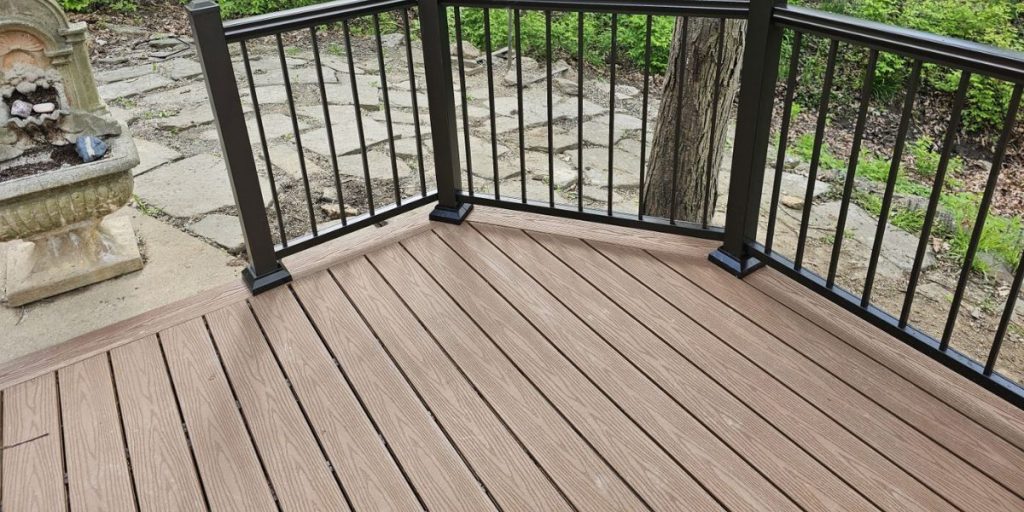
The cost of decking depends on both installation and future upkeep. Here is how the options compare:
While comparing different types of deck materials, review the following before making a final decision:
Warranty coverage is often missing from decking material comparisons. Some products include coverage for appearance changes or structural defects. The terms can vary by brand and board type.
Wood usually depends more on maintenance, while composite and PVC often come with longer warranties. However, improper installation can limit that protection.
Before choosing a material, review the warranty length and care requirements. Ask whether the chosen board requires specific fasteners or approved cleaning methods before installation begins. These details can affect long-term value and prevent any unwanted surprises down the line.
After exploring the different types of deck materials, the next step is choosing a builder who understands local conditions. Mueller Remodeling helps turn your plans into a finished outdoor space that feels practical and lasting. If you are also comparing a deck and a patio, our team can help you make that decision. To discuss your deck project in Loveland or East Cincinnati, call us today at (513) 404-7162.